
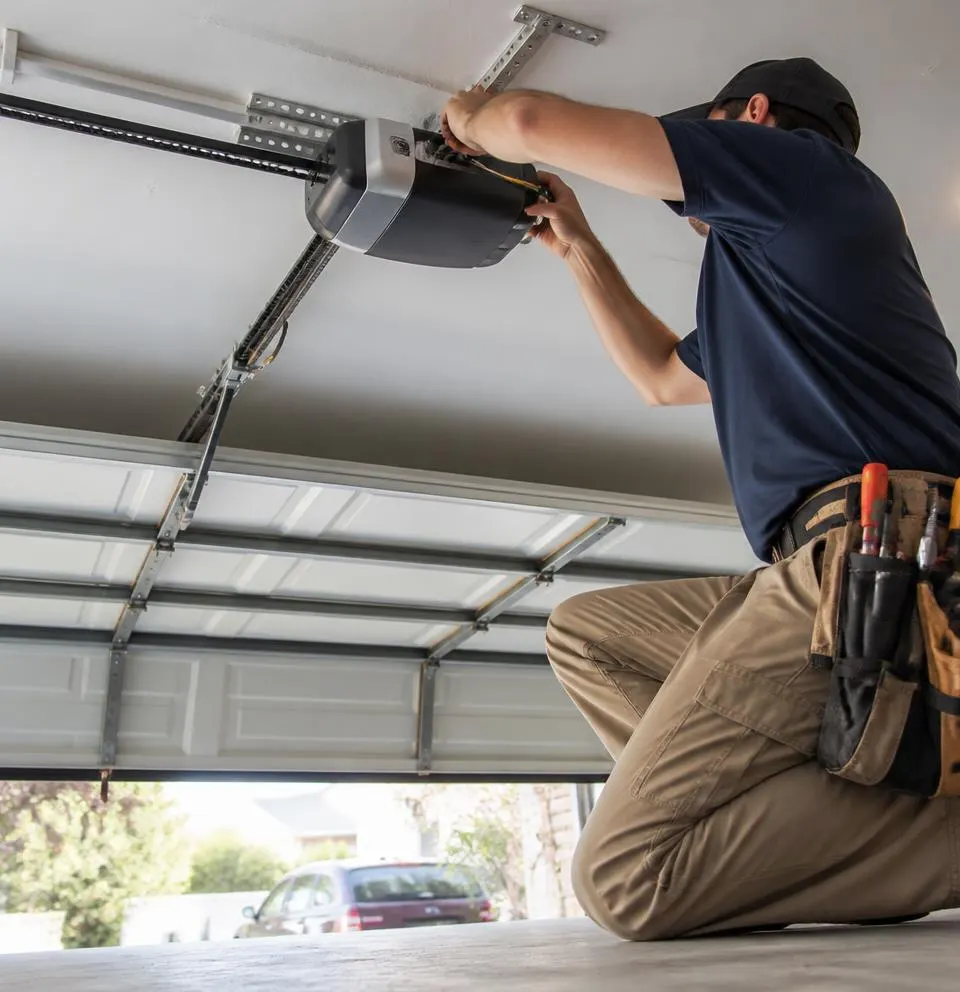
What a Technician Sees on These Calls
A typical fall storm call starts the same way: a homeowner noticed their garage door "breathing" during a windstorm — flexing in and out with each gust — and by the next morning it won't open, or one panel has a visible bow in it. Sometimes a roller has popped out of the track because the door was pushed sideways under pressure. Sometimes the whole door came off its track entirely after a gust caught it mid-cycle. In almost every case, the homeowner says some version of the same thing: "I didn't think the garage door was something I needed to worry about."
That's the problem. Most people storm-prep their roof, their gutters, maybe their windows. The garage door, which is often the single largest moving opening in the entire house, gets ignored until it fails.
Why the Garage Door Is a Home's Weakest Wall
A garage door isn't a wall in the structural sense — it's a large panel held in place by springs, rollers, tracks, and a motor, with nothing solid behind it. When high wind hits a closed house, pressure builds on the windward side and drops on the leeward side. A garage door has to resist that pressure difference across a surface that can be 7 to 16 feet wide, using hardware that was mainly engineered for lifting the door's weight, not fighting sustained wind load.
When a door fails under wind pressure — buckling inward, a panel cracking, or the whole door blowing in — it doesn't just damage the door. A breached garage door lets wind pressure build up inside the structure, which is part of why uplift on roofs and damage to walls gets worse once the garage door goes. That's why it's treated as a priority item in storm-resistant construction, even though homeowners rarely think of it that way.
Why This Matters Right Now in the Thumb
Fall in this part of Michigan brings a mix that's genuinely hard on a garage door: the tail end of humid summer storm systems still rolling through with gusty wind and heavy rain, open farmland and flat terrain that gives wind nothing to slow it down before it hits a house, and then the shift into the kind of deep cold, snow, and ice that defines winter here. A door that's already a little loose on its tracks or running on worn rollers going into a fall storm is the same door that's going to struggle once road salt, ice buildup, and sub-zero temperatures are added to the mix a few weeks later. Fixing it now solves two seasons at once.
Check the Hardware Before the Next System Rolls Through
- Rollers and track alignment: Open and close the door manually (disconnect the opener first) and watch the rollers. If they wobble, bind, or look worn down, they're more likely to jump the track under wind pressure.
- Track bolts and brackets: These loosen gradually from everyday vibration. A few turns with a wrench on the mounting bolts can be the difference between a track that holds and one that bends.
- Hinges between panels: Look for bent hinges or elongated screw holes — signs the door has already flexed more than it should.
- Weatherstripping at the bottom and sides: Cracked or flattened seals let wind-driven rain in now and let cold air and ice in later. Replacing it is inexpensive and does double duty for storm and winter prep.
Reinforce the Door Itself
Older or lighter-gauge doors, especially steel doors without internal bracing, are the ones most likely to bow under wind load. Horizontal bracing kits can be added to the inside of the door to stiffen it against pressure — a reasonable investment, generally in the low hundreds of dollars range depending on door size, compared to replacing a door outright. If the door is older and showing rust, dents, or panel separation already, bracing is a patch, not a fix; at that point it's worth discussing whether a wind-rated replacement door makes more sense.
Don't Forget the Opener
Garage doors that lose power during a storm and get left half-open — because someone started the cycle right as the power cut out — are exposed the whole time the storm is active. A battery backup for the opener keeps the door operable during outages, which matters here given how often fall storms knock out power along with high wind.
Spring Tension Matters More Than People Think
A door with a worn or improperly balanced spring works harder every time it moves, and that extra strain shows up fastest during high-cycle, high-stress conditions like a windstorm. A door that's noticeably heavy to lift by hand, or that closes unevenly, is already under more mechanical stress than it should be before wind ever becomes a factor.
When to Call Marlette Garage Door
If your door is flexing visibly in wind, has come off a roller before, or you can hear new creaking and banging during storms, that's worth a look before the next system comes through — not after the damage happens. Marlette Garage Door handles garage door maintenance visits that catch loose hardware, worn rollers, and failing weatherstripping before they turn into a storm-related breakdown, and we do spring replacement when a door's imbalance is adding unnecessary stress to the whole system. If a panel has already bowed or cracked, panel replacement is usually more practical than a full door replacement.
If you're in Marlette, Brown City, Sandusky, Croswell, Deckerville, Cass City, Kingston, or Snover and want your garage door checked before the next round of fall wind and storms, give Marlette Garage Door a call — we treat every job like it's a neighbor's house, because around here, it usually is.